
Special Session 15 会议特别专题 15
Marine Intelligent Systems: Integration of Sensing, Communication, Computing and Large Language Models
Description:
The ocean, covering 71% of the Earth’s surface,
presents significant challenges for timely and
accurate perception and understanding due to its
vastness, complexity, and lack of infrastructure. We
are entering a new era of the “Intelligent Ocean,”
driven by advances in marine observation, the
Internet of Things, and artificial intelligence
(AI).
This special session aims to bring together
researchers from academia and industry to explore
solutions to these challenges through the deep
integration of multiple technologies. We focus on
building intrinsic intelligence within marine
information systems. The core lies in the integrated
design of sensing, communication, and computing, and
the utilization of large-scale AI models (e.g.,
LLMs) to process and understand the growing volume
of multi-modal maritime big data, ultimately
enabling a closed loop from data to intelligent
decision-making.
This session will showcase state-of-the-art research
in this interdisciplinary frontier, covering novel
architectures, efficient intelligent algorithms, and
advanced system prototypes. We invite submissions on
topics including intelligent marine perception,
cross-domain information fusion, collaborative
resource optimization, and the application and
optimization of large models for ocean-specific
scenarios. This session will provide a much-needed
platform for interdisciplinary exchange among signal
processing, communications, AI, and marine science.
Session organizers
Assoc. Prof. Yanglong Sun, Jimei University, China
Assoc. Prof. Zhiping Xu, Jimei University, China
Lecture Qiang Mei, Jimei University, China
Dr. Peng Wang, Institute of Computing Technology,
Chinese Academy of Sciences
Lecture Qianfeng Lin, Zhejiang Ocean University,
China
This
session complements and deepens existing conference
topics like “Underwater Vision Processing” and
“AI-aided Signal Processing” by focusing on
system-level integration and cognitive-level
intelligence. Specific topics include, but are not
limited to:
▪ Integrated Sensing,
Communication, and Computing (ISAC) theories and
technologies for marine environments
▪ Maritime big data management, analysis, and large
model (LLM/Multimodal AI) applications
▪ Intelligent marine perception and autonomous
cognition (target recognition, situation awareness,
decision generation)
▪ Intelligent collaboration and resource management
in underwater/surface heterogeneous networks
▪ Marine edge intelligence and lightweight model
deployment
▪ Marine digital twins and intelligent simulation
systems
▪ Marine cross-modal (acoustic, optical,
electromagnetic) information fusion processing
Submission method
Submit your Full Paper (no less than 5 pages with two colums) or
your paper abstract-without publication (200-400
words) via
Online Submission System, then choose Special
Session 15 (Marine Intelligent Systems: Integration of Sensing, Communication, Computing and Large Language Models)
Template Download
Introduction of
Session organizers
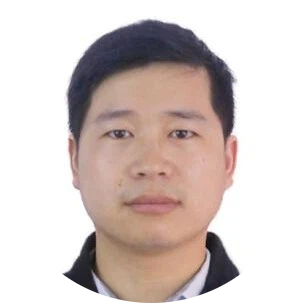 Assoc. Prof. Yanglong Sun,
Jimei University, China
Assoc. Prof. Yanglong Sun,
Jimei University, China
Yanglong Sun received the Ph.D. degree from Xiamen
University, China, in 2022, received the B.S. degree
and M.S degree from Zhengzhou University, China, in
2011 and 2014 respectively. He is currently an
Associate Professor at Navigation College, Jimei
University. He was a Visiting Ph.D. Student at the
Broadband Communications Research (BBCR) Laboratory,
Department of Electrical and Computer Engineering,
University of Waterloo, Waterloo, ON, Canada, from
2018 to 2019. His research interests include
resource allocation in mobile networks, the Internet
of things, and intelligent transportation systems.
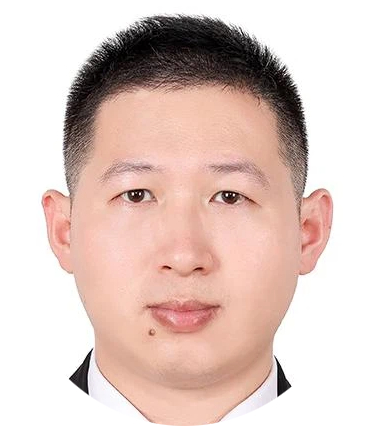 Assoc. Prof. Zhiping Xu,
Jimei University, China
Assoc. Prof. Zhiping Xu,
Jimei University, China
Zhiping Xu received the Ph.D. degree in information
and communication engineering from Xiamen
University, Xiamen, China, in 2021. He is currently
an Associate Professor with the School of Ocean
Information Engineering, Jimei University, Xiamen,
China. He has authored or coauthored more than 40
journals and conference papers. His current research
interests include joint source-channel coding, coded
modulation, maritime\underwater object detection,
the Internet of Things, and synthetic aperture
sonar\radar system.
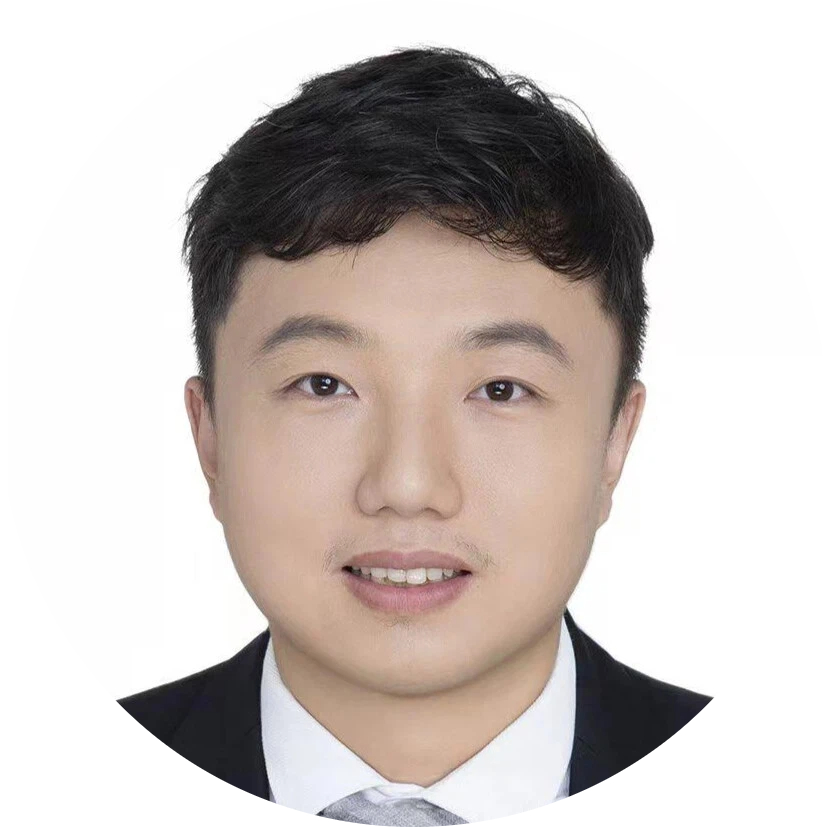 Lecture Qiang Mei,
Jimei University, China
Lecture Qiang Mei,
Jimei University, China
Qiang Mei received the Ph.D. degree in Shanghai
Maritime University, and is now working as a
lecturer at the School of Navigation at Jimei
university, currently executing one national major
science and technology project as the project
executor, leading one Fujian Provincial Natural
Science Foundation project and two Fujian Provincial
Department of Education funds as the project leader,
one open fund from the Digital Fujian Big Data
Modeling and Intelligent Computing Research
Institute; He has participated in the drafting and
approval of the Deep Blue Plan, a key project of the
Maritime Safety Administration of the Ministry of
Transportation. His direction is GIS and maritime
safety.
 Dr. Peng Wang,
Institute of Computing Technology, Chinese Academy of Sciences
Dr. Peng Wang,
Institute of Computing Technology, Chinese Academy of Sciences
Wang Peng received the Ph.D.in Engineering from
Shanghai Maritime University, specializes in
multimodal data analysis and processing. His
research focuses on key technological breakthroughs,
including knowledge construction methods for
multimodal maritime information, anomaly detection
algorithms, and intelligent decision-making models.
He has also developed lightweight situational
awareness systems that meet the demands of
carrier-based scenarios requiring low latency, high
real-time performance, network independence, and
high reliability, enabling practical implementation.
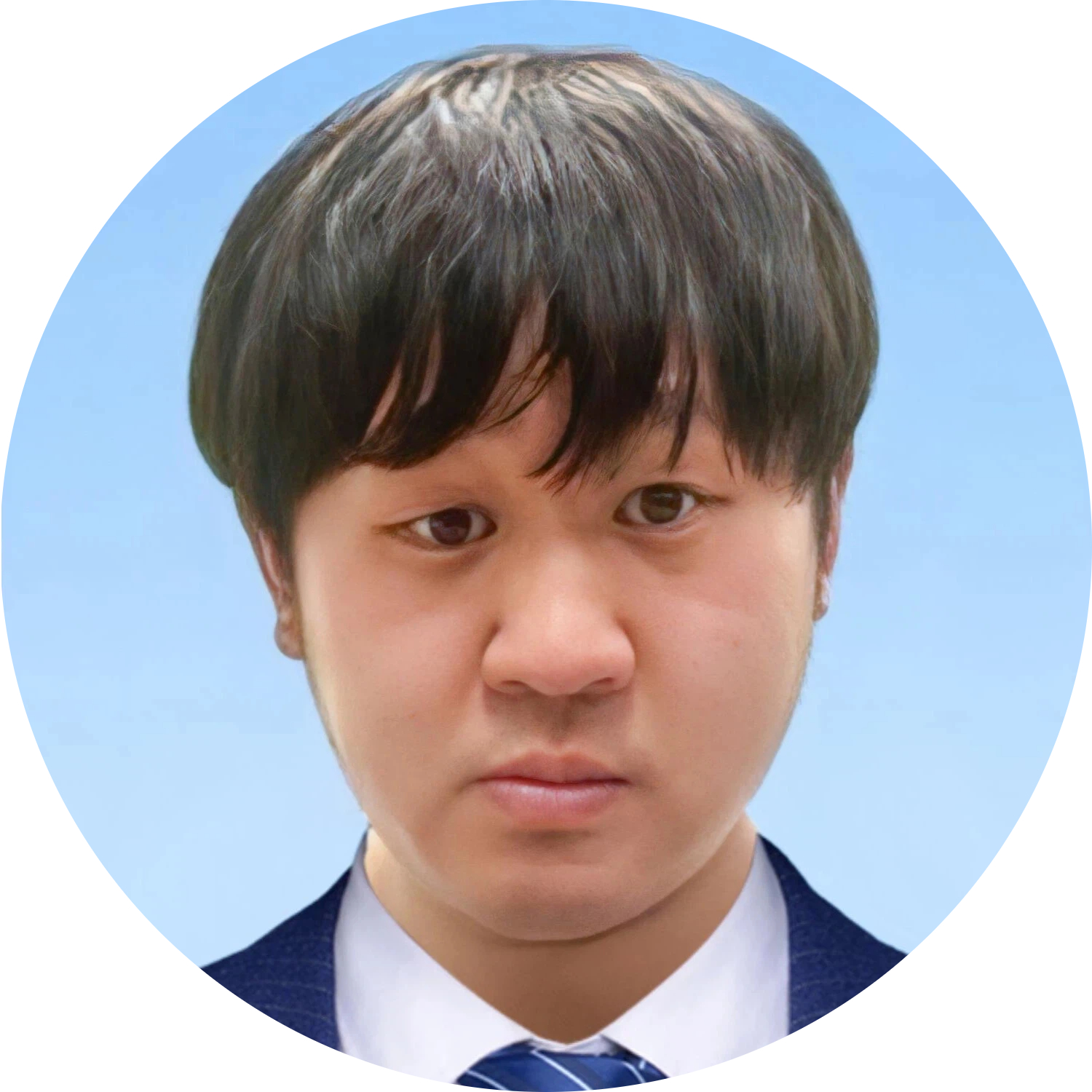 Lecture Qianfeng Lin,
Zhejiang Ocean University, China
Lecture Qianfeng Lin,
Zhejiang Ocean University, China
Qianfeng Lin received the Ph.D. degree in Computer
Engineering from National Korea Maritime and Ocean
University. He is now working at the School of Naval
Architecture and Maritime, Zhejiang Ocean
University. His research interests include in-ship
positioning, maritime intelligence, deep learning,
machine learning, and data mining.